





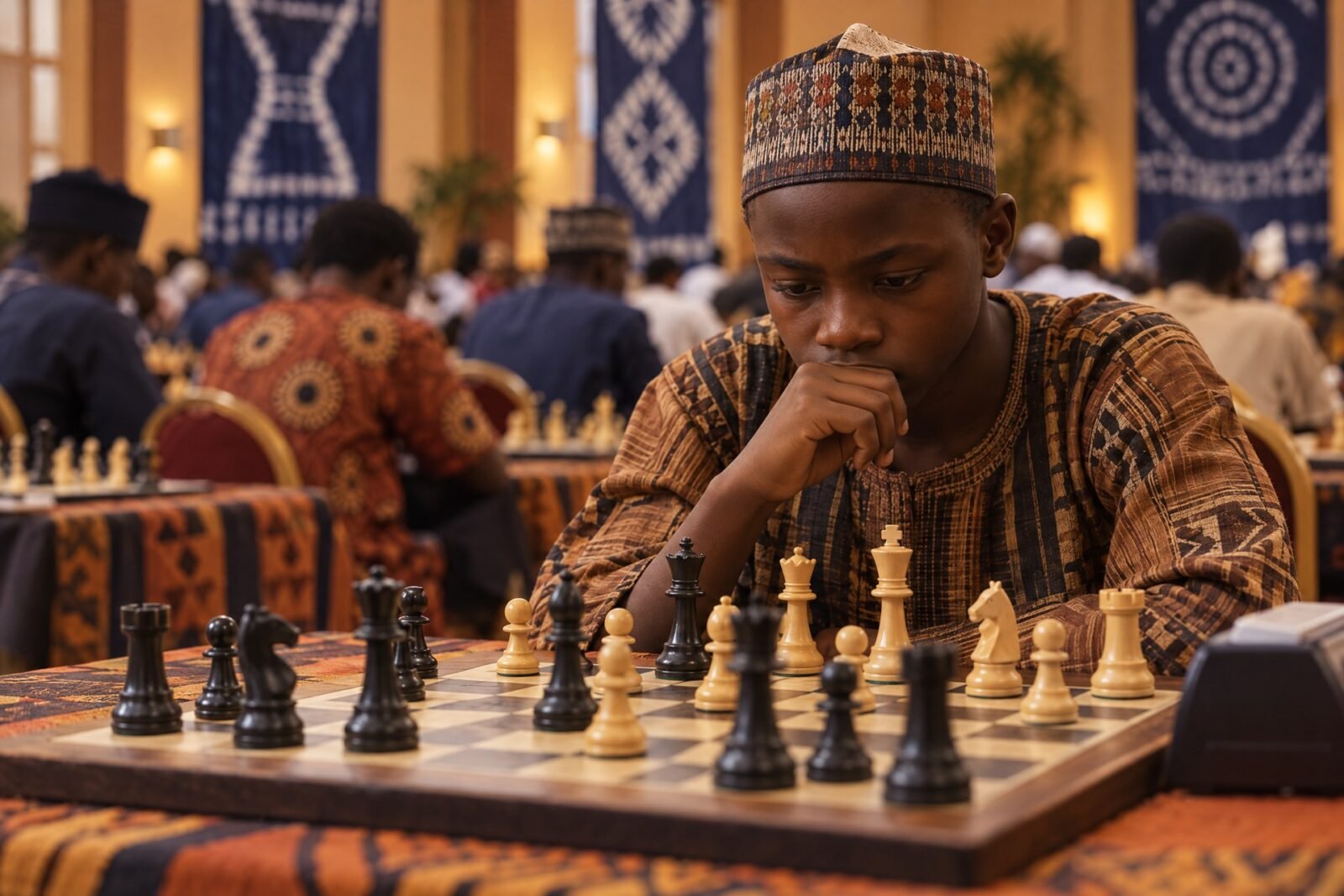
Why Nigeria Needs More FIDE-Rated Chess Tournaments
Regular rated play would connect grassroots ambition to recognised progress, stronger competition and a deeper national chess ecosystem.
 Afro RookSeptember 10, 20265 Mins read
A stronger rating culture can make Nigerian chess more visible, fair and ambitious
Nigeria does not need to choose between mass participation and serious competition. It needs a healthier bridge between the two, and regular FIDE-rated tournaments can help build it.
The problem is access, not enthusiasm
A FIDE rating is a record built from eligible games in tournaments submitted under FIDE regulations. FIDE’s Qualification Commission says that a first Standard rating requires at least five games against rated opponents and at least half a point.
That exposes the practical gap. A talented junior in Kano, Enugu or Ibadan may train seriously yet struggle to find enough classical games that count internationally. Online ratings and local competitions can be valuable, but neither automatically provides a recognised FIDE record.
More rated tournaments would make the route visible: where to obtain a FIDE ID, when the next event is due, which time control applies and how results will be reported. That clarity matters to players, families, coaches, sponsors and the diaspora.
Ratings turn games into a development record
The strongest case for more rated events is feedback, not prestige. FIDE publishes a monthly list, and its regulations allow a new player’s results to be pooled across consecutive rating periods within stated limits.
That creates a shared language for improvement. Coaches can track performance against stronger opposition, organisers can seed sections sensibly, and players can set targets beyond reputation or an online number.
A rating cannot capture resilience, preparation, sportsmanship or the joy of a community event. It does provide a common reference when Nigerian players meet, travel within Africa or seek invitations abroad.
The benefits extend beyond players. Rated tournaments create demand for trained arbiters, administrators and reliable reporting. They reward disciplined clubs and give sponsors a clearer competition product.
You may learn much more from a game you lose than from a game you win. You will have to lose hundreds of games before becoming a good player.
José Raúl Capablanca, former World Chess Champion
Nigeria already has a foundation
This is not an argument for starting from zero. The Nigeria Chess Federation describes itself as the official regulatory body, affiliated with FIDE, and lists rating players, training arbiters and sanctioning tournaments among its responsibilities. That is a base for a broader calendar.
The FIDE database shows that Nigeria can deliver a formal rated event. The Nigeria National Open Chess Championship 2025 in Lekki, Lagos, used a Standard time control and was rated for January 2026. Its record lists 12 players and a full arbiter team.
Twelve players is not a reason to dismiss it. It is a reason to ask how the next edition can be larger, more accessible and more regular. A national championship can remain an elite showcase while a parallel circuit serves developing players.
Nigeria has also demonstrated hosting capacity. The federation’s own site records Lagos as the host of the 2022 Africa Individual Chess Championship. A major event and a domestic circuit are different jobs, but the first shows what aligned organisation can achieve.
Build a ladder, not a single showcase
There are fair objections. A rated event needs suitable time controls, an approved arbiter structure, accurate player information and timely reporting. Longer games also require venues for more hours, while travel can exclude players outside the host city.
There is also a quality concern. A tournament should not become “rated” merely because the label attracts entries. FIDE requires federation pre-registration, compliance with the Laws of Chess and a chief-arbiter report; event rules must state that it will be rated.
Those safeguards are arguments for better design, not scarcity. A rushed event can damage trust; published regulations and results build it. The answer is a tiered calendar, not a race to rate every informal gathering.
Nigeria should aim for a predictable ladder of rated play. The goal is different entry points with consistent standards, not an expensive elite event every weekend.
| Level | Purpose | Design priority |
|---|---|---|
| Community and school opens | Give new players a first route into rated chess | Affordable entry, clear FIDE ID help and local venues |
| State and regional circuits | Create repeat opposition and reduce travel barriers | Fixed dates, rotating host cities and published standings |
| National open and championship | Test the strongest players and attract wider attention | Strong field, professional arbiting and full media coverage |
| Invitational and diaspora events | Connect Nigerian players with international opposition | Hybrid funding, visiting players and transparent selection |
The first step should be a public annual calendar showing which events are Standard, Rapid or Blitz rated. FIDE’s FAQ directs players to their federation’s calendar, so each listing should include the organiser, venue, time control, entry conditions, FIDE ID process and reporting date.
The second step is geographical balance. Lagos and Abuja can anchor the circuit, but it cannot depend on two cities alone. Rotating rated weekends through state associations, universities and established clubs would spread opportunity.
Finally, organisers and the federation should publish reports promptly and correct mistakes openly. Players will tolerate a tough result more readily than a missing result. Trust grows when every game has a clear place in the record.
Success would not be measured only by the number of Nigerian names on a monthly list. It would be visible in juniors returning, women finding regular competitive sections, arbiters gaining experience and clubs planning seasons rather than isolated weekends.
It would give the diaspora a stronger reason to engage. Nigerian players abroad could return for a known circuit, while visiting players could find a reliable route into local competition.
More FIDE-rated tournaments are not a cure for coaching, school access, equipment, safeguarding or funding. They can connect those investments to evidence: more serious games, clearer progress and a public record of development.
Capablanca’s point about learning from losses is useful here. Nigeria needs more chances to lose, learn and return—not careless events, but properly run tournaments where improvement is recorded and shared. A FIDE-rated calendar would make that principle infrastructure.
Frequently asked questions
Tap any question to open the answer.
What is a FIDE-rated tournament?
It is an event conducted under FIDE requirements and submitted through the relevant national federation for rating. Depending on the time control, the games may contribute to Standard, Rapid or Blitz ratings.
How can a Nigerian player get a FIDE rating?
The player first needs a FIDE ID and must enter eligible rated tournaments. FIDE says a first Standard rating requires at least five games against rated opponents and at least half a point in those games.
Would more rated events make every player stronger?
No. Ratings record results; they do not replace coaching, analysis or regular practice. More well-run events would, however, give players more measured opposition and a clearer way to judge whether their work is translating into competitive performance.






Leave a comment