





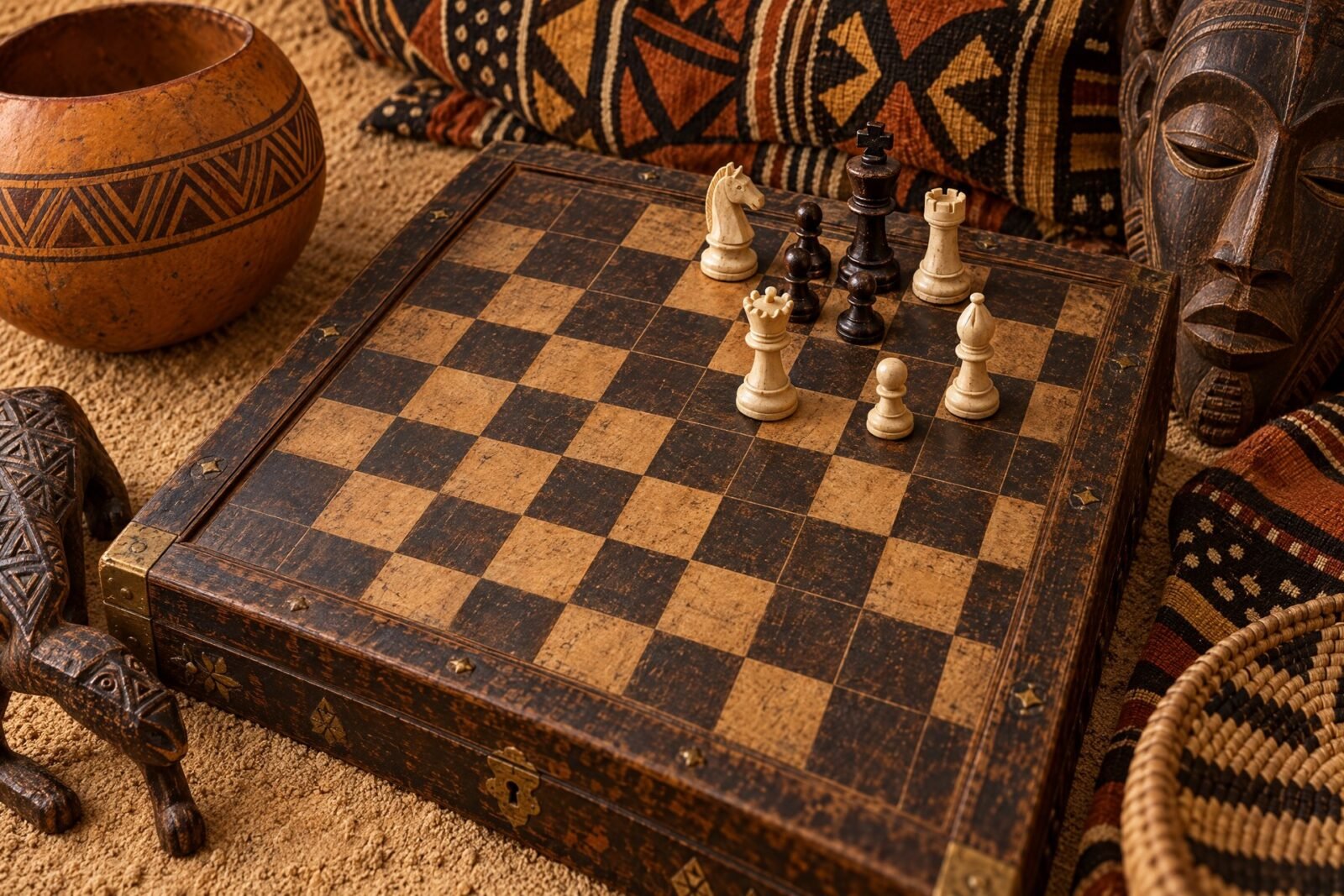
The Opera Game: How Morphy Beat Two Nobles in a Box
The famous miniature still rewards close study because every attacking move is tied to time, open lines and the exposed king.
 Afro RookSeptember 19, 20265 Mins read
 A Paris consultation game that still teaches attacking chess
In the popular imagination, Paul Morphy’s Opera Game is a perfect chess story: an American master, two aristocrats, a Paris theatre box and a miniature ending in checkmate. The surviving score is just as useful as the setting, because it shows how development and initiative can turn a modest opening advantage into a forced attack.
The scene in Paris
The game was played in Paris in 1858, at the Salle Ventadour, while an opera was being performed. Morphy had the white pieces; Karl II, Duke of Brunswick, and Count Isouard de Vauvenargues consulted together for Black. That makes it a consultation game, not a normal two-player contest, and explains the title’s “two nobles”.
The exact date and the opera itself are less settled than the legend suggests. Some accounts give October or November, while later historical investigations have weighed performances of Norma and The Barber of Seville. The careful version is therefore simply “Paris, 1858”; the drama does not need a more precise date than the evidence can support.
The game took place in the Duke’s box, with Morphy facing the two consultants. The setting is memorable, but the chess is a serious demonstration of what happens when one side uses every tempo to bring pieces towards the enemy king.
Read the score, not the legend
The recorded game begins as a Philidor Defence: 1. e4 e5 2. Nf3 d6 3. d4 Bg4. Black’s third move develops the bishop but allows White to challenge the centre immediately. Morphy does not pause to collect material; he opens lines and keeps his pieces active.
After 4. dxe5 Bxf3 5. Qxf3 dxe5, White’s queen has recaptured on f3 and Black’s king is still in the centre. Morphy follows with 6. Bc4, then 7. Qb3, putting pressure on the b7-pawn and the f7-square. The queen move is not a solo attack: it works because the bishop is already aimed at f7 and the rest of White’s army is ready to join.
| Moment | Verified moves | What to watch |
|---|---|---|
| Opening break | 1. e4 e5 2. Nf3 d6 3. d4 Bg4 4. dxe5 | White opens the centre before Black can complete development. |
| Pressure builds | 6. Bc4 Nf6 7. Qb3 Qe7 | The bishop and queen point towards vulnerable squares. |
| The material offer | 9. Bg5 b5 10. Nxb5 cxb5 | White gives up a knight to remove the pawn shield and open lines. |
| The finish | 16. Qb8+ Nxb8 17. Rd8# | The queen is sacrificed because the rook mate is forced. |
The table is a map of the game’s logic. At each stage, ask what changes: a pawn disappears, a piece gains a tempo, a file opens or a defender is pinned.
It was Paul Morphy and his exploits that first induced me to enter chess life and to him I owe my career in the first instance.
Wilhelm Steinitz, the first World Chess Champion
Development before decoration
Morphy’s attack is often described as brilliant, but its logic is plain. White develops the bishop, brings the queen to an active square, develops the knight and castles long. Black spends time on pawn moves and must answer threats instead of coordinating the pieces.
The sequence 8. Nc3 c6 9. Bg5 b5 shows the difference. Black tries to chase the bishop and gain space on the queenside, yet the move 9. Bg5 increases the pressure on the knight that guards key defensive squares. White is not attacking because the position looks romantic; White is attacking because the pieces are better placed.
The same principle matters in modern club chess across Nigeria and the diaspora. An early queen move is not automatically good, and a sacrifice is not automatically sound. First ask whether the move is supported by development, open lines and a target that cannot run. Morphy’s queen is safe because his minor pieces and rooks are arriving with tempo.
The sacrifices that made the finish
The first major break comes with 10. Nxb5. Black replies 10… cxb5, accepting the knight and opening the b-file area. Morphy then plays 11. Bxb5+, using the bishop to check and keep the black king from finding relief. The point is not the nominal value of the knight; it is the removal of a pawn and the creation of lines for the remaining pieces.
After 11… Nbd7 12. O-O-O Rd8, White’s king is castled and the rook on d1 is ready to use the open file. Morphy plays 13. Rxd7, and Black recaptures with 13… Rxd7. White then doubles the pressure with 14. Rd1. The black rook on d7 is tied to the king, while the knight that might defend it is itself constrained by the attack.
The final combination is unusually clean. After 15. Bxd7+ Nxd7, Morphy plays 16. Qb8+. Black must take the queen with 16… Nxb8, but that permits 17. Rd8#, the verified finish in the score. The queen sacrifice works because it is not a gamble: the rook arrives with checkmate while the black king has no escape square.
This is the practical lesson of the Opera Game. Judge a sacrifice by the position it creates: Morphy gives material to remove defenders, open routes and force replies.
ChessBase’s enduring lesson is simple: occupy the centre, develop pieces, open lines and mate the king. The opponents were amateurs consulting together, so the game is not proof that every attack works against elite resistance; it is a model for converting time into activity while the enemy king remains uncastled.
Edward Winter’s research also shows why the opera and exact date should not be repeated as settled facts. For study, stop before each sacrifice and identify the defender removed; after 17. Rd8#, every surviving white piece has done a job.
Frequently asked questions
Tap any question to open the answer.
Who played the Opera Game?
Paul Morphy played White against Karl II, Duke of Brunswick, and Count Isouard de Vauvenargues. The Duke and the Count consulted together for Black, making the game a consultation game.
When and where was the Opera Game played?
It was played in Paris in 1858, at the Salle Ventadour, in an opera box during a performance. Sources disagree about the exact date and which opera was on stage, so those details are best treated as uncertain.
What is the famous finish of the Opera Game?
The verified score ends 16. Qb8+ Nxb8 17. Rd8#. Morphy sacrifices his queen because Black’s forced capture allows the rook to give checkmate on d8.





Related Articles

Kasparov vs Topalov 1999: The Immortal Game
Study Kasparov vs Topalov 1999 at Wijk aan Zee: the opening surprise,...
Alekhine–Nimzowitsch 1930: The Zugzwang Game
Follow Alekhine–Nimzowitsch, San Remo 1930, move by move: the French Winawer, Alekhine’s...

The Immortal Game: Anderssen vs Kieseritzky, 1851
Adolf Anderssen’s 1851 masterpiece sacrificed a bishop, two rooks and a queen....


The Game of the Century: 13-Year-Old Fischer Beats Byrne
Revisit Bobby Fischer’s 1956 win over Donald Byrne: a Grünfeld battle where...

Leave a comment