






A Renaissance opening with a modern answer to practical chess
The Italian Game is one of the oldest recorded chess openings, yet it still fits the way many people play in clubs today. Its first moves develop pieces towards the centre and point a bishop at the vulnerable f7-square, but the position can then become a calm manoeuvring battle or a tactical fight. That combination of familiar principles and genuine choice explains why the opening has travelled from sixteenth-century analysis to contemporary chess rooms.
The position that defines the Italian Game
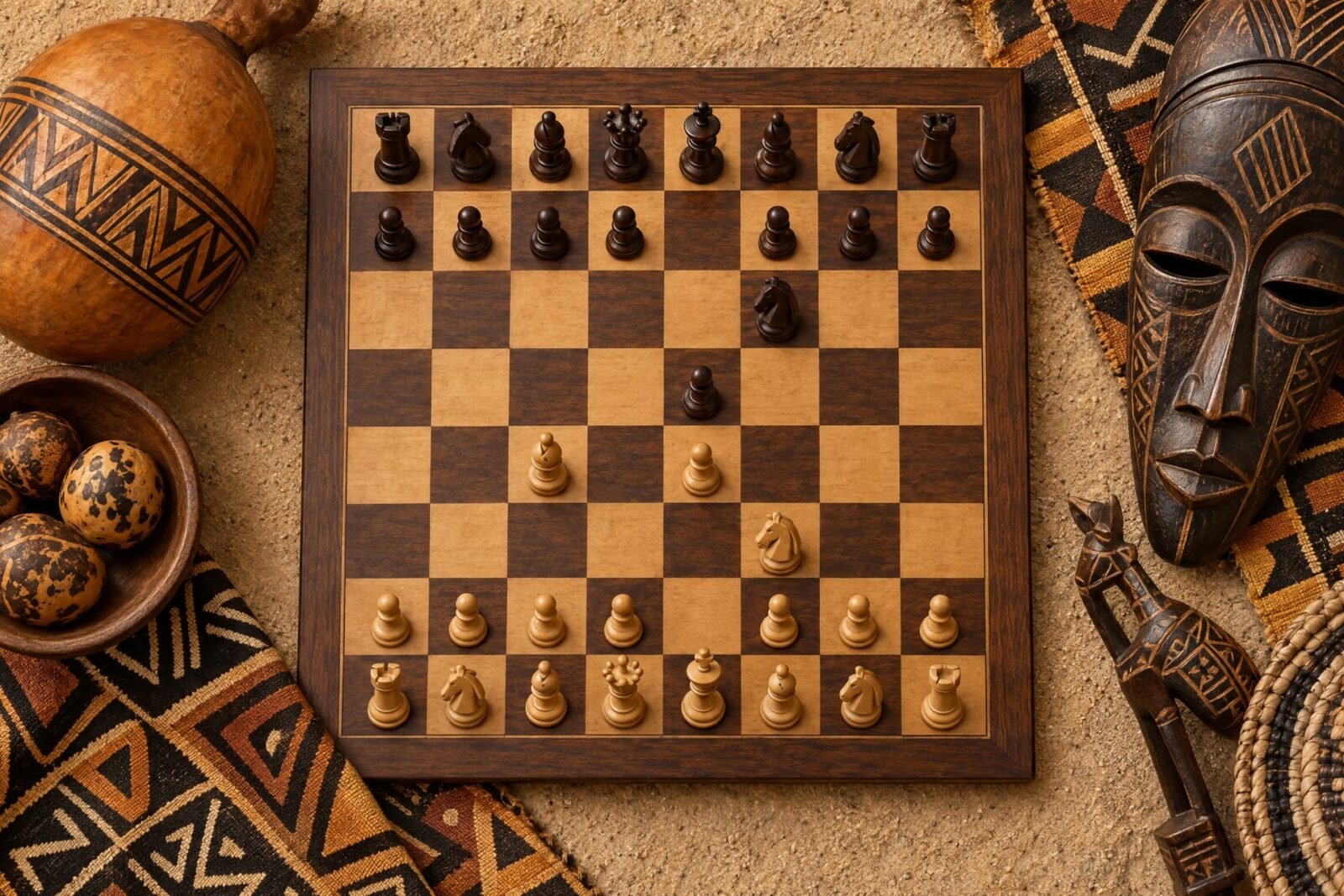
The Italian Game begins 1.e4 e5 2.Nf3 Nc6 3.Bc4. White claims space with the king’s pawn, brings out the king’s knight and places the bishop on c4, where it attacks f7, a pawn protected only by the king at this stage. Black has developed a knight towards the centre and can meet the bishop with 3…Bc5, the Giuoco Piano, or 3…Nf6, the Two Knights Defence.
The name is broader than the familiar “quiet game”. Giuoco Piano is Italian for “quiet game” and traditionally described the line with Black’s bishop on c5. In modern usage, Italian Game normally covers the family of positions beginning with White’s third-move bishop development, including the Two Knights Defence and other replies.
That broad family is useful for a learner. The opening is not a fixed script in which every move must be memorised. It is a starting point for learning when to develop, when to challenge the centre and when a bishop should retreat rather than exchange itself.
| Branch | Defining idea | Practical character |
|---|---|---|
| Giuoco Piano | Black answers with …Bc5 | Flexible, often positional, but capable of central breaks |
| Giuoco Pianissimo | White chooses an early d3 plan | Slower build-up with manoeuvring and later central pressure |
| Evans Gambit | White plays b4 and offers a pawn | Fast development and attacking chances despite the material |
| Two Knights Defence | Black answers with …Nf6 | More immediate pressure and sharper tactical possibilities |
From Renaissance records to opening theory
The opening’s history is unusually well documented. The Portuguese writer Pedro Damiano recorded games in the Giuoco Piano at the beginning of the sixteenth century. Italian player Giulio Cesare Polerio analysed the opening in his codexes, and Gioachino Greco later developed important lines in manuscripts circulated to wealthy patrons between 1620 and 1625.
Greco is associated with an old main line in which White prepares a central advance with c3 and d4. His work helped turn practical play into opening knowledge that could be studied, copied and tested by later generations. The opening therefore belongs not only to chess folklore but to the written history of chess analysis.
The Italian Game remained popular into the early twentieth century. Improvements in defensive play then encouraged many masters to prefer the Ruy Lopez, which was often considered to offer White a longer-lasting initiative. That change did not make the Italian unsound; it changed the fashion around where White expected an advantage to come from.
A book cannot by itself teach how to play. It can only serve as a guide, and the rest must be learned by experience.
José Capablanca, former world champion and author of Chess Fundamentals
Quiet does not mean harmless
The Giuoco Piano gives White two broad strategic choices. The classical approach uses c3 and d4 to support a direct challenge in the centre. The modern approach uses d3 first, keeps the centre more stable and prepares the same ambition with more patience. Neither plan is automatically better: the right choice depends on development, king safety and the moment when the centre can be opened.
The opening also includes the Evans Gambit, in which White sacrifices a wing pawn to gain time for development and create attacking chances against the king. That is an important correction to the word “quiet”. A position may begin with symmetrical development and still become forcing once one side changes the pawn structure or opens lines.
For Black, the Italian Game is a test of restraint as much as calculation. Developing naturally is not enough if a central break is about to open the position. Black must decide whether to challenge White’s centre, exchange the active bishop or accept a slower game in which both sides improve their pieces before committing.
A useful training habit is to study plans rather than collect traps. After each move, ask which piece has improved, what pawn break is being prepared and which side benefits if the centre opens. Those questions remain relevant whether the game reaches a sharp gambit or a quiet manoeuvring position.
Why it still works in club chess
Chess.com describes the Italian Game as common among beginners but also part of the repertoires of players at every level. That range is one of its practical strengths. A new player can understand the first principles, while a stronger club player can explore move-order choices, tactical resources and long-term plans without abandoning the same opening family.
The opening is also forgiving in the right way. Its early moves are natural, but they do not remove the need to think. A player who knows only the first three moves still has to solve real questions about castling, central breaks, bishop retreats and the route of the queenside knight. That makes every game a lesson rather than a memory test.
The modern c3-and-d3 approach helped restore the Italian Game to high-level attention from the 1980s. Anatoly Karpov used it twice against Viktor Korchnoi in their 1981 world championship match, and both games were drawn. Modern lines have continued to appear in high-level play, while the same structures remain accessible to players meeting over a club board in Lagos, London or anywhere in the African diaspora.
For practical preparation, build a small repertoire around positions you can explain. Learn one Giuoco Piano plan, one response to the Two Knights Defence and one sharper option such as the Evans Gambit. Then review your own games: note whether you lost time moving the same piece, opened the centre before development was complete or missed the opponent’s freeing break.
Capablanca’s advice belongs here because an opening book cannot replace experience. The Italian Game rewards players who use study to recognise patterns, then test those patterns in serious games. Its survival is not a claim that every Italian position is winning; it is proof that a sound framework can keep producing meaningful decisions centuries after its first records.
Frequently asked questions
Tap any question to open the answer.
Is the Italian Game suitable for beginners?
Yes. The opening starts with natural developing moves and introduces central control, king safety and the value of active pieces. Beginners can play it without memorising a large tree of variations, then add sharper or quieter plans as their understanding grows.
What is the difference between the Italian Game and the Giuoco Piano?
The Italian Game is commonly used for the wider opening family beginning 1.e4 e5 2.Nf3 Nc6 3.Bc4. The Giuoco Piano is the branch in which Black replies 3…Bc5, although older terminology sometimes used the names more interchangeably.
Should White play a quiet plan or attack immediately?
White can choose either, depending on the position and playing style. A d3-based plan keeps more tension and allows manoeuvring, while c3 and d4 or the Evans Gambit can open the centre more quickly; both require attention to development and king safety.






Related Articles

Caro-Kann Defence: A Solid Answer to 1.e4
Learn why the Caro-Kann Defence works, how its pawn structure frees Black’s...

King’s Indian Defence: a practical guide to Black’s attack
Learn the King's Indian Defence move order, closed-centre plans, ...e5 and ...f5...

Five Chess Opening Traps Club Players Should Know
Learn five documented chess opening traps, the mistake behind each one, the...



Three Opening Principles Every Beginner Should Follow
Learn how to claim the centre, develop with purpose and castle safely,...

Leave a comment