





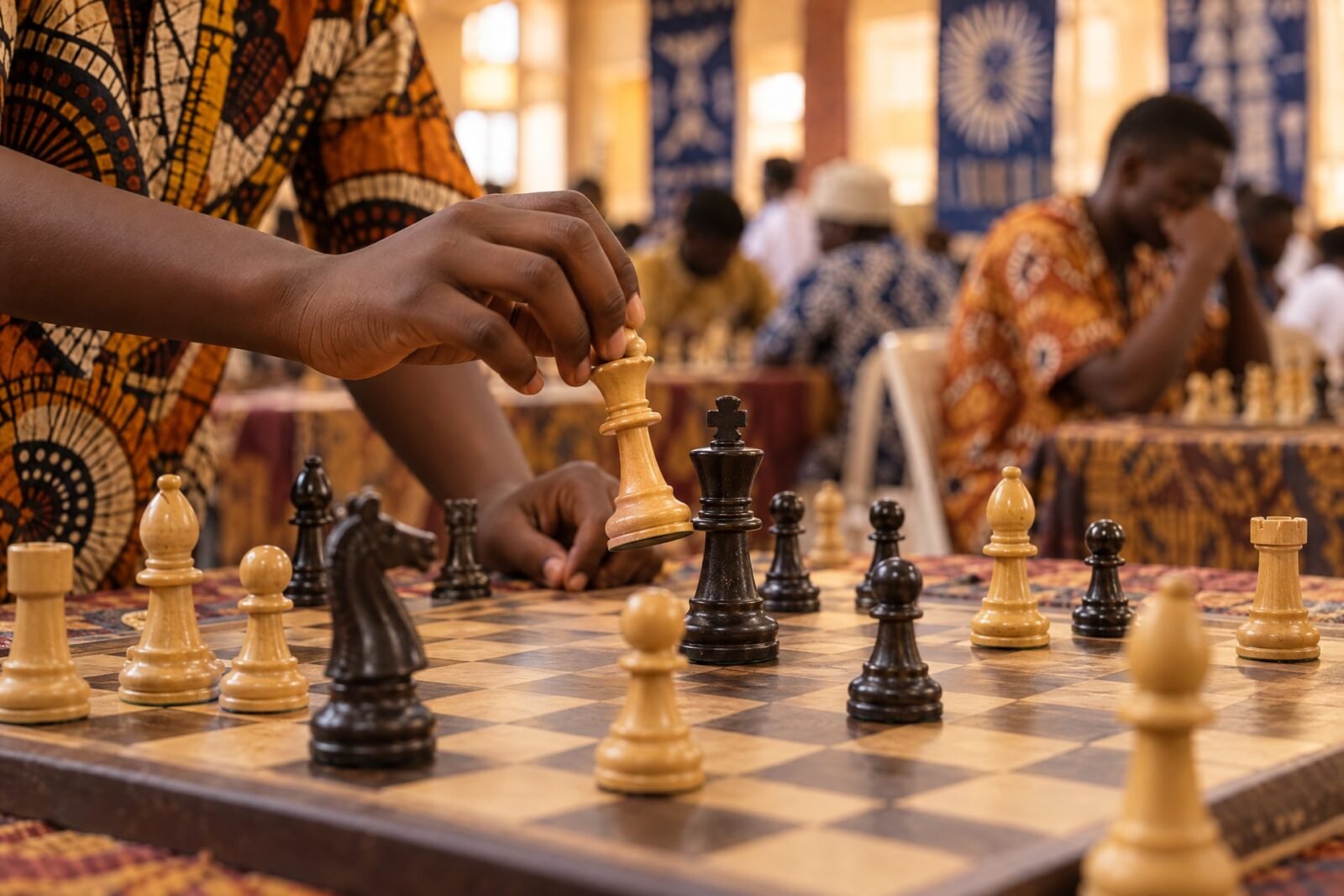
The Game of the Century: 13-Year-Old Fischer Beats Byrne
How 17...Be6, a storm of checks and coordinated pieces made a 13-year-old’s brilliancy a lasting lesson

A 1956 masterpiece about initiative, calculation and the price of a queen
On 17 October 1956, 13-year-old Bobby Fischer defeated the established American master Donald Byrne in New York’s Rosenwald Memorial tournament. The game became famous for one startling decision: Fischer offered his queen, not as a desperate gamble, but as the centrepiece of a forcing attack.
The setting: a young player against a master
Fischer was playing Black, Byrne White, and the result was 0–1. The game transposed into a Grünfeld Defence, a fitting choice for Fischer’s active, counter-attacking style: Black allows White to build a broad centre, then aims to undermine it with quick development and pressure on the central pawns.
The event was Fischer’s first serious test against a field of established adult masters. His overall tournament result was modest, but the win over Byrne immediately stood apart. It was played on 17 October, published in Chess Life soon afterwards, and awarded a special top brilliancy prize for the most meritorious game in the tournament.
That reaction matters. The game was not slowly promoted into greatness decades later. In December 1956, Hans Kmoch’s Chess Review description gave it the name that endured: “The Game of the Century”. The label was grand, but the contemporary response was equally clear: observers saw a remarkable performance from a teenager who had calculated far beyond the expectations attached to his age.
The first tactical alarm: 11…Na4
The opening looks calm until White’s queen travels to c5 and Byrne develops his bishop to g5. That bishop move spends a tempo on a piece that had already moved, while White’s king remains in the centre. Fischer’s reply, 11…Na4!!, is the first great tactical signal.
The knight attacks the queen and exploits the fact that the queen’s placement has become awkward. More importantly, Fischer’s move is not an isolated trick. It connects the attack on the queen with pressure on the c3-knight, the d4-pawn and the uncastled king, forcing White to answer threats instead of completing development.
Byrne’s queen retreats to a3, but Fischer keeps the initiative. The sequence that follows shows why the game is more than a celebrated trap: Black repeatedly chooses moves that improve several pieces at once. The queen is chased, the centre is opened, and the rooks and bishops are brought towards the king before White can coordinate.
| Position in the game | What to notice | Practical lesson |
|---|---|---|
| After 11…Na4!! | The queen is attacked and White loses time responding | Look for moves with more than one threat |
| After 17.Kf1 | White attacks the queen, but the king is exposed | A material threat may be less important than king safety |
| After 17…Be6!! | Fischer offers the queen for a forcing continuation | Calculate the resulting activity, not the sacrifice alone |
| After 25…Nxd1 | Black has won a rook, two bishops and a pawn for the queen | Material must be counted alongside coordination and initiative |
The following game, a stunning masterpiece of combination play performed by a boy of 13 against a formidable opponent, matches the finest on record in the history of chess prodigies.
Hans Kmoch, tournament director and chess writer
Why 17…Be6!! is the famous move
After 16.Bc5 Rfe8+ 17.Kf1, Byrne appears to have a simple solution: take Fischer’s queen next. A player protecting valuable material would normally move it. Fischer instead played 17…Be6!!, placing the bishop where White could capture the queen.
Byrne accepted the offer with 18.Bxb6. The point was not that a queen had suddenly become worth less than a bishop. Fischer had calculated that the capture would open lines and allow a series of checks, while White’s king would be driven from square to square and Black’s pieces would collect material.
The immediate continuation, 18…Bxc4+, begins a “windmill” of discovered checks. Fischer’s knight checks from e2 and c3, repeatedly forcing the king to move while the attack also removes useful White pieces and pawns. The checks are not decoration: each one preserves the initiative and makes it difficult for White to bring the queen or remaining rook into the defence.
At 25…Nxd1, the arithmetic becomes visible. Fischer has obtained a rook, two bishops and a pawn for the sacrificed queen. That is a favourable material balance, but the deeper point is positional: Black’s pieces are active and mutually protected, while Byrne’s queen is stranded away from the king and has few useful checks or defensive targets.
A lesson in coordination, not just courage
It is tempting to reduce the game to a slogan: young Fischer sacrificed his queen and won. That misses the skill. The sacrifice works because it arrives after a chain of forcing decisions, and because every black piece has a job once the queen disappears.
The bishops control key diagonals. The knights give checks and attack material. The rook enters on the a-file, then helps restrict the king. Fischer does not rely on one spectacular move; he maintains a net in which White’s king is exposed and every attempted escape allows another piece to join the attack.
The finish is equally instructive. Fischer’s pieces force Byrne’s king towards the edge, and the final move, 41…Rc2#, completes the mating net. White’s queen has survived, but survival is not the same as participation: the game demonstrates how a coordinated group of pieces can dominate a queen when the king is vulnerable and the queen is cut off.
For players in Nigeria and across the African diaspora, this is a useful study position because it rewards questions that apply in any tournament hall. Before accepting a tempting piece, ask what checks, captures and threats follow. Before moving a queen to safety, ask whether the opponent is using the tempo to activate every other piece. Fischer’s example remains practical because it teaches a process of calculation rather than a move to memorise.
The game’s historical importance comes from the combination of result, age and quality. Fischer was not yet the world champion he would become, and Byrne was not an anonymous opponent. The encounter showed a teenage player finding a deep tactical idea against a respected master, then carrying it through accurately to checkmate.
The queen sacrifice should therefore be studied as a question, not a myth. Fischer did not sacrifice because boldness is always correct. He sacrificed because the position gave him forcing checks, targets and piece coordination. That distinction is why the Byrne–Fischer game still belongs in a modern player’s training file.
Frequently asked questions
Tap any question to open the answer.
Who played the Game of the Century?
Donald Byrne had White and Bobby Fischer had Black. Fischer won the game in the 1956 Rosenwald Memorial tournament in New York, when he was 13 years old.
What was Fischer’s queen sacrifice?
The key move was 17…Be6!!. Fischer left his queen available to be captured, calculating that the ensuing checks and exchanges would win enough material and keep White’s king trapped in a dangerous position.
Why is it called the Game of the Century?
Hans Kmoch used the name in Chess Review in December 1956 after Fischer’s brilliancy had already attracted attention and won a special tournament brilliancy prize. The title reflects the game’s combination of tactical originality, accurate calculation and the extraordinary age of its winner.




Related Articles

Kasparov vs Topalov 1999: The Immortal Game
Study Kasparov vs Topalov 1999 at Wijk aan Zee: the opening surprise,...

Alekhine–Nimzowitsch 1930: The Zugzwang Game
Follow Alekhine–Nimzowitsch, San Remo 1930, move by move: the French Winawer, Alekhine’s...

The Immortal Game: Anderssen vs Kieseritzky, 1851
Adolf Anderssen’s 1851 masterpiece sacrificed a bishop, two rooks and a queen....


The Opera Game: How Morphy Beat Two Nobles in a Box
Paul Morphy’s Opera Game is a 17-move lesson in development, initiative and...

Leave a comment